InSmallGardens Instagram

Showing posts with label Chris Brooks. Show all posts

Thursday, May 19, 2016

Birds of Prey Flight Demonstration


Yesterday, all of our Green Academy 6th graders attended a birds of prey flight demonstration performed by the falconers of Last Chance Forever. Last Chance Forever rescues, rehabilitates, and releases abandoned and injured birds of prey back into the wild. The presentation was amazing including owls, hawks, eagles, and vultures. If you would like to learn more about this fantastic San Antonio based organization click HERE to view Last Chance Forever's website. Check out the slide show of the presentation below!

Thank you again to this wonderful organization for giving our students such a transformative experience.


Tuesday, May 17, 2016

Knife Skills: "What's on your plate?"


Mr. Brooks' What's on your plate class is in the process of preparing for their final project (a three course meal made from whole foods) by learning some knife skills. Check out the pictures below!


Thursday, April 7, 2016

7th Grade Trip to the Wildflower Center

Mr. Brooks' and Mr. Rosenberg's 7th grade students visited the Lady Bird Johnson Wildflower Center last week and braved the heat... and the cold to learn about watersheds and native plants. They even did a bit of spelunking and got nice and muddy! Enjoy the slideshow of pictures from the trip below! 


Tuesday, February 16, 2016

From the classroom: Using Jenga to learn the parts of a habitat!


Last week in Mr. Brooks' The World Outside class, students demonstrated how habitats must have a balance of resources (food, water, shelter, and space) by playing Jenga. Check out the slideshow and video of the game below!


Thursday, January 28, 2016

Pattern, Symmetry, and Executive Functioning


Hello all!

Today in Mr. Brooks' 6th grade "The World Outside" class, students practiced mindfulness and executive functioning skills through the art of origami as they studied pattern and symmetry! Check out the pictures below!


Thursday, December 10, 2015

7th Grade Meal Project


Mr. Brooks' "What's on your plate?" class is in the process of serving up their final projects this week in the form of a 3 course tasting menu for their classmates. The students prepared a meal made from scratch with whole, balanced foods and presented it to their peers. Check out our slide show of their tasty creations below!


Wednesday, December 9, 2015

Bucket Race


Mr. Brooks' 6th grade "The World Outside" class was outdoors today learning about watersheds and water conservation. They discussed the ways in which they use water every day. Did you know that every flush of your toilet uses about 5 gallons of water? In order for the students to understand how much 5 gallons is, they carried a 5 gallon bucket once around the entire school with a team! It was great exercise and great fun!


Tuesday, November 10, 2015

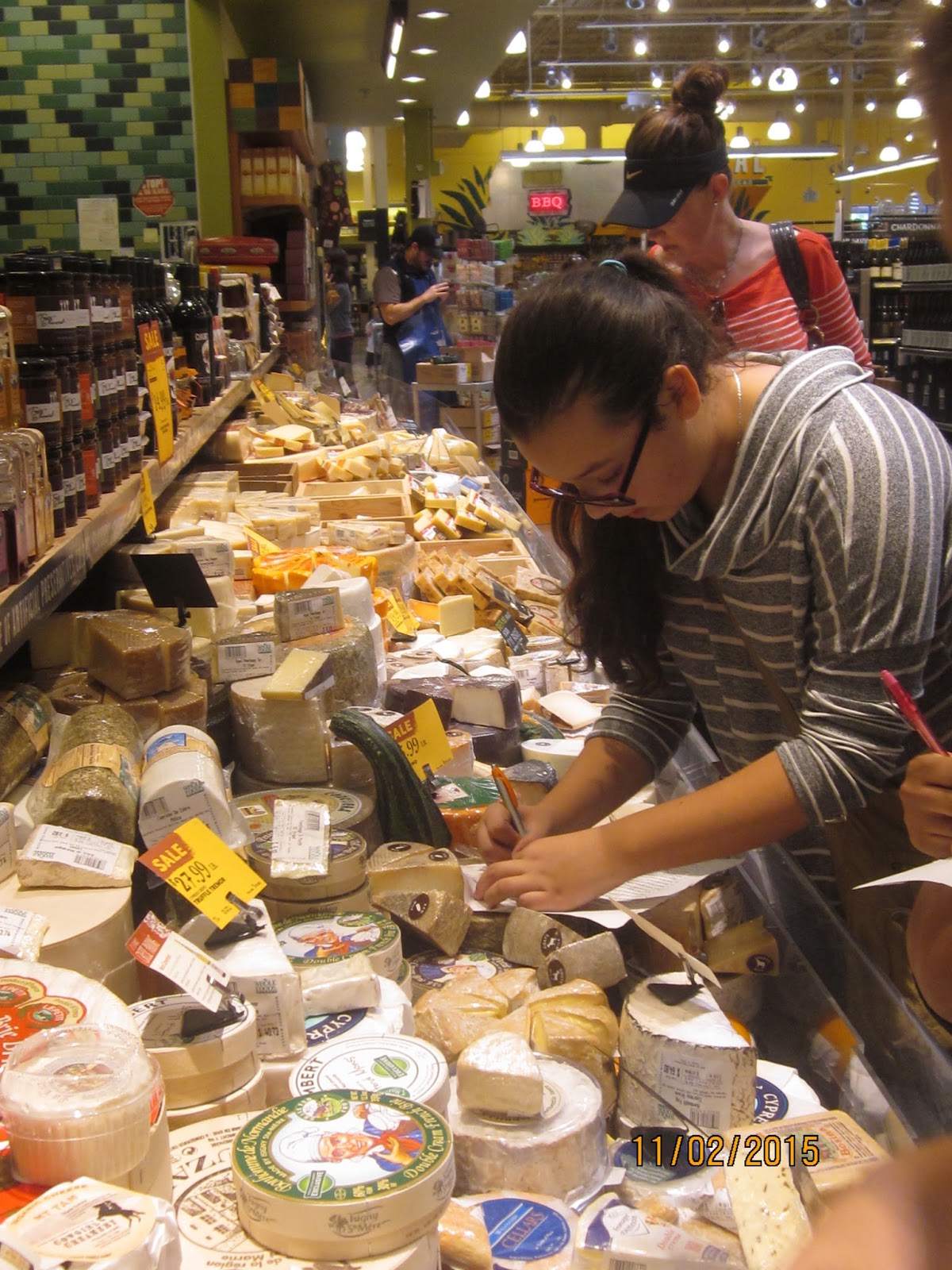
Green Academy Trip to Whole Foods


Mr. Brooks' "What's on your plate?" class visited Whole Foods on November 2nd and 3rd to explore the store and learn more about the food choices they make. Students completed a scavenger hunt throughout the store that tested the limits of their food and nutrition knowledge. The parents, teachers, and students then settled down on the Whole Foods patio to enjoy lunch together.

Check out the slideshow below!


Thursday, March 27, 2014

Spring Plant Sale and Funky Chicken Coop Tour

The Spring Plant Sale dates have been set! 


This year we will be having a 3 day event over 2 weeks! The first week the sale is on Thursday April 10 and Friday April 11 during the school day from 9 am to 5 pm. This will allow us to have a large number of student volunteers and will accommodate attendants' varying schedules. The second week the plant sale will be on Saturday April 19 from 10 am to 4 pm. We are attempting to test out which arrangement of dates and days will help raise more fund for the Green Academy. As always we will be selling native Texas plants, herbs, and vegetables that have been propagated by students and donated generously Emerald Garden Nursery. (http://www.pondsandgarden.com/)


 Plant sizes range from 4 inch pots to 5 gallons. Prices start at $3 and go up to $50.
Students will be available to give tours of our extensive gardens. If you see it growing on our campus, there's a good chance we will have it for sale.
Don't forget to buy a t-shirt or two!

Here are list of the plants we usually carry. We can get many others and usually will have many more. 


Texas Red Bud
Mexican Plum
Fragrant Mimosa (in bloom)
Possumhaw
Yaupon Holly
Wax Myrtle
Anacacho Orchid (in bloom)
Crossvine (in bloom)
Montezuma Cypress
Monterey Oak
Red Yucca (in bloom)
Twist Leaf Yucca
Manfreda (in bloom)
Gulf Muhly
Lindheimer Muhly

Inland Sea Oats
Blue Eyed Grass (in bloom)
White Coneflower
Purple Coneflower (in bloom)
Cedar Sage
Salvia Cleavelandii
Snake Herb
Red Columbine
Wedelia
Fluttermills
Datura
Texas Betony
Wooly Stemoda
Chocolate Daisy
Texas Rock Rose (in bloom)
Apache Plume (in bloom)
Chili Pequin
Arroyo Sweetwood
Escarpment Cherry

Larger trees and other species are available by request.


The Saturday date was also chosen to go along with our inclusion in the Funky Chicken Coop Tour. (http://austincooptour.org/) Please visit their site


for more information.  This is some of the information provided about the event on their site:

The 6th Annual Austin Funky Chicken Coop Tour, April 19, 2014. Begin the day with a stop by Coop Tour Headquarters, at Sunshine Community Gardens in a cooperative arrangement withTexas School for the Blind and Visually Impaired, 4814 Sunshine Drive, Austin, Texas 78756. The Tour’s coops are open for tour goers from 10:00am-4:00pm. Coop Tour Headquarters will include coop tour and cycling registration, vendors, and a free education center, nestled throughout Sunshine Community Gardens, with their own onsite coop and chickens.
https://www.facebook.com/AustinFunkyChickenCoopTour 
Twitter @afct
Flickr athttp://www.flickr.com/photos/austincooptour

Wednesday, August 22, 2012

Welcome Back and Greetings

August 27 is the first day of school for Austin ISD, Clint Small Middle School, and the Green Tech Academy. While summer was great, and much needed, it is nice to get back into the swing of things on campus. I wanted to use this email to introduce you all to myself and other changes to Small staff, to update everyone on Small events over the summer (pictures to follow), welcome you back, and give a brief overview of basic items needed for the school year, and operations.

Our school had many drastic changes come about at the end of the school year. For most of you that follow this blog, I hope that you are aware that David Matthews,  partially retired at the end of the year, going to half time, and is now fully retired. He was our leader, advocate, and inspiration. He is spending time with his family and working on a retirement home on Leakey. His knowledge, expertise and friendship will be greatly missed. Even though he will be around occassionally to help on campus and to offer advice, it won't be the same without him around in the gardens.

We also had many other teachers retire, move campuses, or move on to bigger and brighter things. All of them will be individually missed both personally and professionally. Everywhere I look on campus and at District events it seems there are new faces. I am very excited to welcome everyone and get their fresh perspectives on education and Small!

If you have been at Small at all for the past 4 years, you will be familiar with me. My name is Nate Rosenberg. I have been referenced on this site before working in the greenhouse, running Clean Sweeps, and doing our Earth Day plantings. Chris Brooks and I will be taking over the class load for the Environmental portion of the Green Tech Academy. I have been at Small for 4 years, teaching 6th grade Science and Environmental Sciences. Chris has been teaching for more than a decade, and has been at Small for more that 7 years. Chris has worked in Social Studies, World Cultures, English, and Environmental Sciences. We luckily had a new addition to the Green Tech Academy. Our former Assistant Principal, Sherry Lepine, has added on being our Dean this year. We are super excited! She is already working furiously being an advocate for the program advertising for our GREENFEST, which will be taking place very soon this semester. We will have environmental events, activities, live music from some big Austin acts, food, drink, FUN, education, and mostly FUN. More information will definitely be trickling out when we get it locked in. Each of us will occasionally be contributing to this site and posting pictures of the wonderful things going on at CSMS.

This Summer, Small was crazy busy with events. We had our annual Cougar Camp, where we invited 5th graders on track to attend Small to get to know the campus and our culture. They had a great time! For the first time we offered the STEM Summer Camp. STEM is an acronym for Science, Technology, Engineering, and Math. We did 5 different themed 1 week camps ranging from Endangered Species to Digital Story Telling. Turn out was great and the kids loved it! It was educational and FUN! We didn't lose any kids but some may have had some close encounters and the Austin Nature and Science Center or at Sea World. After the camp, each of us got a chance to work individually, travel, and relax. Chris and I were able to finally finish our chicken coop. We have had chickens and other wildlife in classrooms being taken care of at Small by students for many years. Last year we had some issues will our natural environmental issues colliding with our permaculture. Natural residents on our campus, red-tailed hawks, were struggling last year with the drought and out chickens were an easy entree. Our coop is now hawk and predator proof.

Now for the nitty gritty. For all Environmental Science electives, you will ALWAYS NEED IN CLASS a WRITING UTENSIL, PENCIL OR PEN ONLY, AGENDA, AND A COMPOSITION NOTEBOOK. There is a $5 lab fee. This lab fee will be used to buy new plants, seeds, growing medium, tools, animals holding tanks and many other things. If your family cannot afford the lab fee please email or call me, so alternative arrangements can be made. Right now all supplies are on sale. Please stock up. Almost all classes at Small use the composition notebook, so why not buy a bushel. Classes will be great this year I look forward to seeing and hearing from everyone. As promised photos will follow from this summer.

Wednesday, February 29, 2012

The Case of the Disappearing Trash


Last school year we met with a representative from Texas Disposal Services to discuss bringing a lunchroom composting project to Small like the one they were piloting several AISD elementary schools.
Mr. Brooks and his students are already running a vermiculture and an organic garden compost project. Would this be a conflict?
 Two weeks ago Small Principal Amy Taylor and Environmental Science teacher, Chris Brooks, worked out details to continue his projects and overlaying the TDS program. This environmentally recognized green industry leader has such an efficient composting production facility that they are able to compost at much higher temperatures than we can. This allows them to accept paper products and food scraps of any kind.


This pilot project starts Thursday March 1st.

Saturday, December 10, 2011

A Semester's Difference


Our Green Tech electives are semester long. In a mere 16 weeks students in Mr. Brooks's classes have made a huge impact on our campus.  

Chickens
Underused picnic tables were relocated to the front of the schools. This left an empty concrete pad in a protected alcove close to water and electricity. Mr. Brooks reclaimed this area and relocated the Frisby coop to offer better lodging for our layers. Next semester should see the debut of ChickenCam.

Notice the resemblance?

Vermiculture
Working with Keep Austin Beautiful students began an indoor composting station that employs red wigglers to break down food scraps and strips of discarded newsprint. Students have learned that reducing waste is not enough. We have to find ways to harvest the nutrients in the waste that we still generate.


Expansion of Food Production
Another collaborative effort doubled the capacity of our raised vegetable gardens. Students also improved the structure of the protective cold frames. Already students have munched on chard, kale, spinach, parsley, and cilantro. Modeling local organic food production is not just targeted for our students, but the community as well.


 Sheet Mulching
The former site of the chicken enclosure is being revitalizes with cardboard, leaf mold and leftover soils from this semester's projects. Students bravely battled gusting winds often chasing flatted boxes across the back courtyard. The Frisby chicken tractors are still getting a lot of use.


 Herb Spiral 
Another collaborative effort combined surplus soils with Lake Travis driftwood, cemetery stones, and leftover building materials in a coiled bed for growing herbs.


Cafeteria Composting
Mr. Brooks's student collect cafeteria waste daily. They are using several composting methods including a compost tumbler, a compost tea maker, and wooden bins made by Mr. Scott's students.


As we wind down the Fall semester, we are gearing up for plenty of  green activity in the spring.


Wednesday, November 9, 2011

One Blustery Fall Wednesday


With temperatures in the 40's and 50's and buffeted by wind gusts up to 30 mph, all of the environmental science classes were out in force today. Mr. Brooks's classes tended to the chickens and vegetables, composted, and worked on their new spiral herb bed. Mr. Rosenberg's classes paced out acres by calibrating their strides around the football field and later tending the front flower beds. My classes worked in the gardens, identified trees using a dichotomous key, and hiked down to Williamson Creek to investigate erosion and collect soil samples.  

 
Having just completed their study of monarch butterflies, Native Plants and Animals class prepares their garden area for the winter.

 
We harvested a few suckers and young oaks and put them in the greenhouse. There was a lot to weed and deadhead. Earlier in the week, we collected acorns from white, bur, vase, live, and chinqapin oaks. We will germinate them in shallow, soil filled trays in the greenhouse.


More photos of winterizing our campus:

Thanks to Keep Austin Beautiful for hooking us up with some quality mulch.


 As part of our study of soil, Green Growing students hiked to Williamson Creek.


We journaled focusing on the wind and looked for signs of rill erosion.


Students collected two samples from the creek bed and three from the banks. Next week we will test the soils for pH, friability, and ability to clump.


It was a perfect day for a hike. Many students collected broken glass, flood detritus, and other litter.
See more photos:


Photos by Aylin's Eyes and SouperPix Studios

Wednesday, May 25, 2011

Monumental Project Takes Shape


Collaboration is a wonderful thing.

Having secured a grant from the National Wildlife Federation, Nate Rosenberg, Sylvia Brown, and I attended training on creating an outdoor classroom/wildlife habitat. Mr. Rosenberg took the lead in coordinating the project. His classes chose the site in front of the school. It has several favorable attributes. It is located opposite the purple martin houses, it is close to a water source, it is in highly visible site that becomes muddy in wet weather.

Our Industrial Technologies classes under the supervision of Ronnie Scott built 10 3-person benches.


Preparing the site was a semester long project. Several classes participated: Ms. Brown's and Mr. Brooks's Environmental Science classes, Mr. Rosenbergs's 6th grade Science classes, my Taste of Science and Native Plants and Animals classes (a proto-GreenTech project).


The benches augment the seating capacity for students awaiting parent pick up as well.


Classes remove the bermuda grass, leaving as much of the topsoil as possible. Newspapers and commercial weed barrier cloth came next. Students carted in dozens of wheelbarrow loads of a mix that is heavy in decomposed granite. This adds a lot of minerals to the worn out, clay rich soil, as well as, provides a stable medium for mounding.


Rosenberg's design incorporates a curved berm that mimics the curve of the adjacent sidewalk.


Medina Garden Nursery donated over $200 worth of plants. The salvia greggi, lantana, prairie verbena, and some of the grasses were grown in our campus greenhouse. Parent donations and the remaining grant funds paid for the rest of the plants which we purchased from nearby Emerald Garden Nursery at a super generous discount. AISD helped out with soil and mulch. We also bought a load of GeoGrower's excellent berm mix.


Students worked throughout the day with the goal of getting all the plants in the ground before the 3:30 bell.


Temperatures soared. By the end of school we cracked the century mark.


We got most of the plants in, mulched around their bases and watered them thoroughly.

Click to view photos of the planting frenzy.

Friday, January 21, 2011

Green Elective Profiles Continued


Courtesy of Chris Brooks:

Introduction to Environmental Studies helps students understand the connections between modern human society and the natural world. Sixth grade student “eco-detectives” investigate the life cycles of the “stuff” we use every day. The first six weeks will focus on the food we eat (where it comes from and what is in it). The second six weeks will look at all the things we use (how they are made and what happens to them after we are finished with them). The third six weeks will focus on eco- projects that allow students to pursue their individual interests (for example, gardening, product design, green building and community service).


Sustainable Food Production and Nutrition Studies is the hands-on gardening and chicken raising class for 7th and 8th graders that helps students understand how food gets from the soil to their plates. Students will follow “permaculture” principles as they prepare soil, manage the water supply, choose appropriate plants, and harvest the crops. Students may also choose to participate in contributing food to our school lunch program and selling their products at the farmers’ market.